What are the types of disabilities?
Types of disabilities consist of a wide range of disorders that hinder a person’s life and make him face many challenges in performing his daily tasks or living his life normally. In this article, we will know about the types in detail.
In a related context, the Qatari Thiqa Center provides care services for people with special needs and people with disabilities of various types.
Whether it is a physical disability, a mental disability, or a developmental disability, the center provides various types of treatment that help the person overcome his disability.
What are the types of disabilities?
There are 4 types of disabilities, which are:
Physical disabilities
Visual disabilities
Hearing Disabilities
Mental Disabilities
Here are information about every type:
First: Physical disabilities
These disabilities include a defect in a person’s ability to move and perform various physical activities such as walking, playing sports, etc.
These disabilities can be congenital (present at birth) or acquired due to injury or disease. Some common types of physical disabilities include:
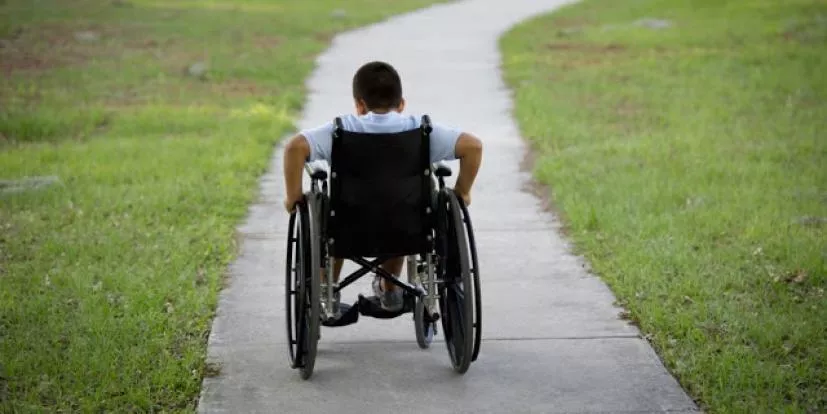
1- Mobility disabilities
Motor disabilities such as paralysis, amputation of limbs, or conditions that affect the ability to walk or move easily.
These disabilities result either from a congenital defect since childhood, or as a result of exposure to an accident or injury in which the person loses his ability to walk and thus becomes either completely or partially paralyzed, or becomes lame.
2- Cerebral palsy
A neurological disorder that affects muscle control, coordination, and body movement. It may cause either complete paralysis of the body's movement, or partial paralysis, and in other cases it may cause damage to the body's vital organs.
3- Spinal cord injuries
Spinal cord injuries refer to damage or trauma to the spinal cord, a vital part of the central nervous system.
What are the types of spinal cord injuries?
Spinal cord injuries can be classified into two main types: complete and incomplete.
In a complete spinal cord injury, a person loses all sensory and motor functions below the level of injury. This means they may suffer from paralysis or loss of sensation in their limbs or other parts of the body.
On the other hand, an incomplete spinal cord injury refers to a person retaining some degree of sensory or motor function below the site of the injury.
The severity and extent of weakness can vary greatly, ranging from weakness or numbness in certain parts of the body to partial paralysis.
4- Multiple sclerosis
Multiple sclerosis (MS) is a chronic neurological disorder that affects the central nervous system (CNS).
This disease is characterized by the immune system mistakenly attacking the protective covering of nerve fibers in the central nervous system, which is called myelin.
This leads to communication problems between the brain and the rest of the body.
What is the cause of Multiple sclerosis?
The exact cause of MS is unknown, but it is thought to involve a combination of genetic and environmental factors.
Symptoms can vary greatly, depending on the location and extent of nerve damage, but common symptoms include fatigue, difficulty walking, numbness or tingling, muscle weakness, problems with coordination and balance, blurred vision, and cognitive changes.
Second: Visual disabilities
are conditions that affect a person's ability to see or interpret visual information clearly. Its severity can range from mild vision loss to complete blindness. Here, There are different types of disabilities , including:
1- Low vision
It refers to significant visual impairment that cannot be completely corrected with glasses, contact lenses, medications, or surgery.
2- Blindness
Total blindness is the complete absence of vision and the inability to perceive light. Individuals with visual acuity of 20/200 or less in their better eye, even with corrective lenses, are legally blind.
3- Color blindness
People with color vision deficiency have difficulty distinguishing between certain colors or may see colors differently. The most common type is red-green color blindness.
4- Tunnel vision
This condition causes loss of peripheral vision, resulting in a narrow field of vision, as if you are looking through a tunnel.
Visual disabilities have a variety of causes, the most important of which are genetic conditions, eye diseases, trauma or eye injury, and some medical conditions such as diabetes or multiple sclerosis.
Third: Hearing disabilities
Hearing disabilities are conditions that affect an individual's ability to hear, understand, or analyze sounds.
It can range from mild to profound and can be classified into different types based on the affected area of the auditory system.
The role of speech and language therapy Doha
Overall, speech and language therapy plays a vital role in Qatar by empowering individuals to communicate effectively, addressing swallowing difficulties, promoting early intervention, providing multilingual support, and collaborating with other professionals to enhance the overall well-being of individuals with communication and swallowing disorders. Go to the Trust Center to obtain this service.
What are the types of hearing disabilities?
Here are some types of disabilities of hearing impairment:
1- Conductive hearing loss
This type of hearing loss occurs when there is a problem in the outer or middle ear, which prevents sound waves from reaching the inner ear properly. They are often caused by problems such as a buildup of earwax, fluid in the middle ear, or damage to the eardrum or ossicles (small bones in the middle ear).
2- Sensorineural hearing loss
This type of hearing loss results from damage to the delicate hair cells in the inner ear or problems with the auditory nerve. It can be congenital or acquired and is usually caused by factors such as aging, exposure to loud noise, certain medications, infections, or genetic disorders.
3- Mixed hearing loss
It refers to a combination of conductive and sensorineural hearing loss. This occurs when there are problems in both the outer/middle ear and the inner ear or auditory nerve.
4- Central hearing loss
This type of hearing loss occurs due to damage or dysfunction of the auditory pathways or areas of the brain responsible for processing sound. It can lead to difficulties understanding speech, even when an individual's hearing thresholds are within the normal range.
Mental disabilities
Mental disabilities are conditions that affect a person's thinking, emotions, behavior, or a combination of these. It can significantly impair an individual's ability to function in daily life and can range from mild to severe.
Mental disabilities can result from various factors, including genetic predisposition, brain chemistry imbalance, traumatic experiences, and environmental factors.
mental disabilities, including different types of disabilities:
1- Anxiety disorders
They are characterized by excessive fear, anxiety, or panic, such as generalized anxiety disorder, panic disorder, and phobias.
2- Mood disorders
These include persistent changes in mood, such as major depressive disorder and bipolar disorder.
3- Psychotic disorders
They are characterized by a loss of contact with reality, including hallucinations and delusions, as seen in schizophrenia.
4- Personality disorders
Chronic patterns of behaviors and thoughts that lead to difficulties in relationships and functioning, such as borderline personality disorder and narcissistic personality disorder.
5- Neurodevelopmental disorders
Usually beginning in childhood and including different types of disabilities such as autism spectrum disorders, attention-deficit/hyperactivity disorder (ADHD), and intellectual disabilities.
6- Eating disorders
They are disturbances in eating behaviors, body image, and related psychological issues, for example, anorexia nervosa and bulimia nervosa.
Trust Center
The Qatari Trust Center is classified as one of the best centers that provide high-quality services for adults and children with special needs.
It is also concerned with treating many types of disabilities by providing the following services:
1- Physiotherapy service
The physiotherapy service specializes in helping people with special needs regain their motor abilities, help them overcome the effects of injuries, and develop and improve their motor skills.
2- Speech therapy service
The Trust Center offers specialized sessions in treating speech problems for adults who may have problems pronouncing some letters, and who suffer from loss of speech resulting from injuries to the nervous system, brain injuries, or any other medical conditions.
3- Group therapy service
The Early Intervention Department at the Trust Center and the Special Needs Department are distinguished by providing a group therapy service that aims to create a unique interaction situation between groups of adults.
This service is also provided to children in a thoughtful way, as different play patterns are followed for treatment, as well as diagnostic and therapeutic patterns.
4- Sensory integration service
This service is accurate and vital, as it aims to activate sensory perception factors in children, by stimulating their senses and helping their brains to analyze the sensory information they receive from the surrounding environment in a logical and clear way.
This service targets children with special needs who suffer from sensory disorders, which clearly appear in those with autism spectrum disorder, dyslexia, and motor planning disorder.
The importance of sensory integration Qatar
This service targets children with special needs who suffer from sensory disorders, which clearly appear in those with autism spectrum disorder, dyslexia, and motor planning disorder.
Sensory integration plays a crucial role in Qatar, as it does in any other country, in supporting individuals with sensory processing challenges.
Sensory integration is the process by which the brain organizes and interprets sensory information from the environment, allowing individuals to respond appropriately to stimuli. This service is one of the best provided by the Trust Center.
Conclusion
The multiple types of disabilities necessarily require the presence of a conscious environment capable of helping the person heal or adapt while increasing the effectiveness of his role in society.
The diversity of these disabilities and their varying levels of severity sometimes require intervention from specialized centers for people with special needs, joining early intervention programs, and obtaining disability support services, and in this field there is no better place than the Trust Center to provide these services.








0 comments